Every year, hundreds of workers suffer serious injuries—or worse—because machinery was accidentally energized during maintenance. These tragedies are preventable. The root cause? A breakdown in proper lockout tagout procedures.
Lockout tagout (LOTO) isn't just a safety checklist item; it’s a lifeline. When executed correctly, it isolates hazardous energy sources and ensures that equipment cannot be restarted until maintenance or servicing is complete. Yet, despite decades of regulation and awareness, deviations from standard protocol remain common—and costly.
This guide cuts through the noise to deliver actionable, field-tested insights into what proper lockout tagout procedures really look like, why they fail, and how to implement them with precision.
What Is Lockout Tagout and Why It Matters
Lockout tagout refers to a safety procedure used to ensure that dangerous machines or energy sources are properly shut off and isolated before maintenance or servicing begins. The process involves two key components:
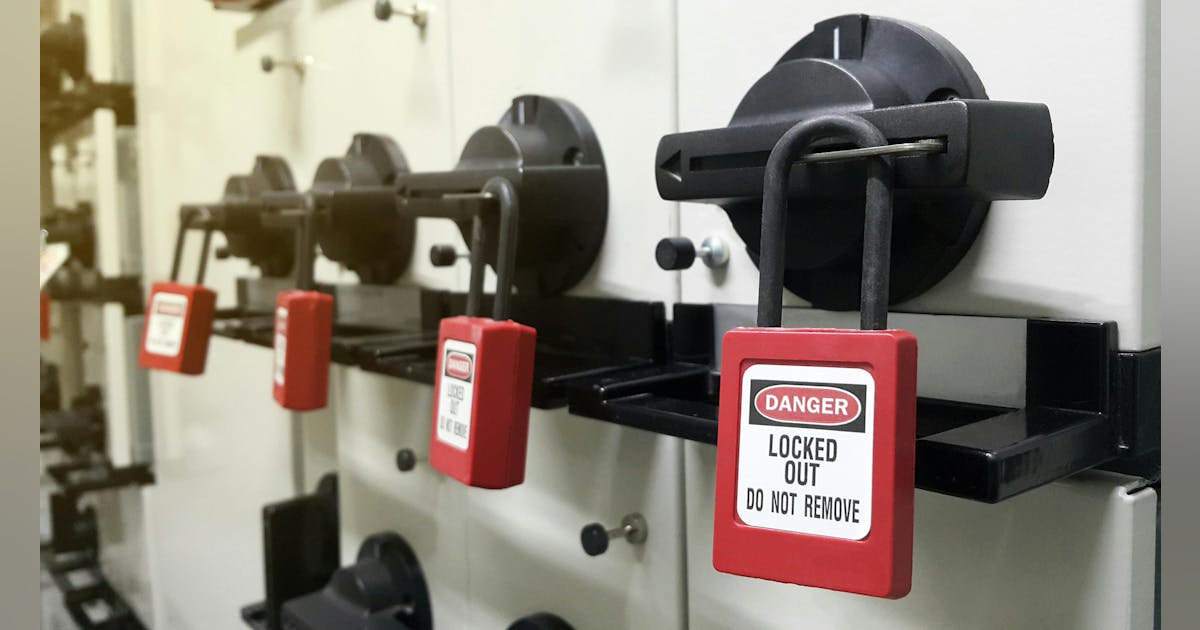
- Lockout: Physically locking energy-isolating devices (like circuit breakers or valves) with a personal lock.
- Tagout: Attaching a visible tag that warns others not to operate equipment until the lock is removed.
The goal is simple: prevent unexpected startup or release of stored energy. This includes electrical, mechanical, hydraulic, pneumatic, chemical, or thermal energy—all of which can cause crushing, electrocution, burns, or fatalities.
OSHA standard 29 CFR 1910.147 establishes the federal requirements for LOTO in general industry. Non-compliance isn’t just risky—it can lead to fines exceeding $15,000 per violation and even criminal charges after serious incidents.
Real-world impact: In 2023, a worker at a Midwest plastics plant was killed when a conveyor system unexpectedly restarted during cleaning. The investigation found no lockout had been applied. This was not an equipment failure—it was a procedure failure.
The 7-Step LOTO Procedure: A Field-Ready Breakdown
Following a structured sequence is critical. Deviating even slightly can compromise the entire process. Here’s the standard flow for proper lockout tagout procedures, refined through industrial best practices.
1. Preparation: Identify Energy Sources and Hazards
Before any shutdown, authorized personnel must assess the equipment. This includes:
- Mapping all energy sources (electrical, hydraulic lines, stored pressure, springs, gravity-fed systems)
- Identifying secondary hazards (e.g., residual heat, chemical residues)
- Confirming the correct isolation points
Common mistake: Assuming a single power switch controls all energy. Many machines have backup systems or stored energy in accumulators.
Pro tip: Maintain equipment-specific LOTO diagrams at the worksite. Visual aids reduce errors during high-stress situations.
2. Notify Affected Personnel
Communicate the upcoming lockout to all employees who operate or work near the equipment. This prevents confusion and ensures no one attempts to bypass the system unknowingly.
Use clear language: > “The packaging line will be down for maintenance from 9 AM to 11 AM. Do not attempt to start it.”
3. Shut Down the Equipment Properly

Use normal stopping procedures—don’t just pull the emergency stop. Emergency stops don’t isolate energy; they only interrupt operation.
Follow manufacturer-recommended shutdown sequences. For example, some CNC machines require spindle cooldown before power removal.
4. Isolate All Energy Sources
This is where the physical lockout happens. At each energy-isolating device:
- Turn off and disconnect
- Apply a lock (one lock per person)
- Attach a tag with:
- Worker’s name
- Department
- Date and time
- Reason for lockout
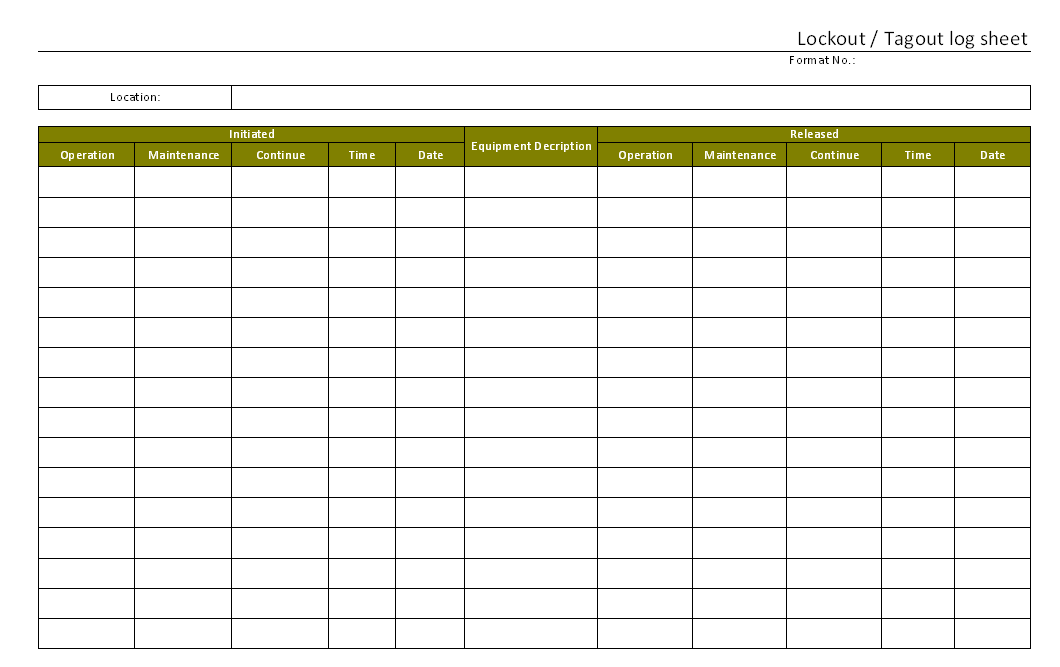
Use only standardized, keyed-alike or keyed-different locks based on your site policy. Personal locks only—no master or shared keys.
Critical insight: A tag without a lock is not compliant. Tags are warnings. Locks are barriers.
5. Control Stored and Residual Energy
Even after isolation, dangerous energy may remain. Examples:
- Hydraulic pressure in lines
- Rotating flywheels
- Capacitors holding electrical charge
- Elevated machine parts under tension
Required actions: - Bleed pressure via relief valves - Drain fluids - Block moving parts - Ground electrical components - Allow cooldown periods
Always verify dissipation with testing tools—never assume.
6. Verify Zero Energy State
This is the make-or-break step. Many injuries occur because verification was skipped or done improperly.
How to verify: - Attempt to start the machine using normal controls (e.g., press start button) - Confirm no movement or response - Re-check after 10–15 seconds to catch delayed discharges
Only after positive verification should work begin.
Case example: A technician in a Texas refinery bypassed verification, assuming a valve bleed was sufficient. Residual gas ignited during welding. The incident resulted in third-degree burns and a $220,000 OSHA fine.
7. Restore Equipment Safely
When work is complete:
- Remove tools and materials
- Reinstall guards and safety devices
- Notify all affected personnel
- Remove locks and tags only by the person who applied them
- Re-energize gradually
Never remove someone else’s lock without formal authorization through a documented lockout retrieval process.
Common LOTO Procedure Failures and How to Prevent Them
Even seasoned teams make critical errors. These are the most frequent breakdowns—and how to fix them.
| Failure | Risk | Solution |
|---|---|---|
| Skipping stored energy control | Uncontrolled release (e.g., whipping hose) | Add energy dissipation as a mandatory step in SOPs |
| Using tags without locks | No physical barrier | Enforce lock-and-tag policy; audit compliance |
| Group lockout confusion | Miscommunication during multi-worker jobs | Use a group lockbox with individual locks and a central checklist |
| Incomplete energy source identification | Hidden hazard activation | Conduct annual LOTO audits with third-party reviews |
| Improper lock removal | Premature restart | Train on lock retrieval procedures; never "borrow" keys |
Workplace tip: Run unannounced LOTO drills. Observe how teams respond. Use findings to refine training—not to punish.
Equipment-Specific Lockout Challenges
Not all machines follow the same rules. Here’s how to adapt LOTO for complex systems.
Conveyor Systems
Multiple energy sources often include motors, drives, and gravity-fed rollers. Best practice: Install zone isolation points with dedicated lockout stations every 20 feet.
Hydraulic Presses

Stored pressure can linger for hours. Critical step: Install pressure gauges at bleed points and require readings below 5 psi before work.
Robotic Cells
Often tied to central control systems. Guideline: Lock out both the robot and its PLC controller. Test motion in teach mode only after clearance.
Pneumatic Lines
Residual air in long lines can cause sudden movement. Prevention: Install manual bleeds at low points and require bleed-and-wait cycles.
Training and Documentation: The Backbone of Compliance
Proper LOTO procedures are only as strong as the training behind them.
OSHA requires: - Initial training for all authorized and affected employees - Retraining every 12 months or after procedure changes - Certification records kept on file
Authorized employees (those applying locks) must understand: - Specific procedures for each machine - Lockout device use - Verification techniques
Affected employees (operators) must know: - Why LOTO exists - How to recognize when it’s in use - That they must never attempt to restart locked equipment
Documentation must include: - Written energy control procedures - Machine-specific checklists - LOTO device inventory - Training logs
Editorial note: Digital LOTO management systems (like PermitSafe or Vingage) are gaining traction. They offer real-time lock tracking, mobile checklists, and audit trails—valuable for large facilities.
Tools and Devices That Support Proper LOTO Execution
The right hardware reinforces discipline. Here are five essential tools used in effective lockout programs:
| Tool | Purpose | Real-World Use Case |
|---|---|---|
| Valve Lockouts | Secure ball, gate, and globe valves | Chemical plant preventing accidental flow during pipe repair |
| Circuit Breaker Locks | Prevent breaker re-energization | Manufacturing floor during motor replacement |
| Group Lockout Hasps | Allow multiple workers to apply individual locks | Maintenance team working on a shared production line |
| Lockout Stations | Centralized storage for locks, tags, and devices | Automotive plant with 50+ workstations |
| Energy Isolation Tags | Standardized warning labels | Food processing facility with multilingual workforce |
Investing in high-quality, durable equipment reduces improvisation—a common root of non-compliance.
Building a LOTO Culture: Beyond Compliance
Compliance is the floor, not the ceiling. The best workplaces treat LOTO not as a regulatory burden but as a cultural value.
How to foster that mindset: - Empower workers to stop work if LOTO seems incomplete - Recognize teams that report near-misses - Include LOTO reviews in safety meetings - Use real incident stories in training (anonymized)
“We don’t skip LOTO here—not for five minutes, not for a quick fix.” — Plant manager, Ohio steel facility with zero LOTO incidents in 7 years
When safety becomes identity, procedures stick.
Final Takeaway: Precision Saves Lives
Proper lockout tagout procedures aren’t complicated, but they demand consistency, awareness, and respect. A single missed step can turn routine maintenance into a catastrophe.
Implementing LOTO isn’t just about avoiding fines. It’s about ensuring every worker goes home at the end of the shift—unharmed.
Start today: Audit one machine’s procedure. Walk through each step. Verify it. Then scale that rigor across your facility.
Because when it comes to lockout tagout, there is no such thing as “close enough.”
Frequently Asked Questions
What is the difference between lockout and tagout? Lockout uses a physical lock to prevent energy restoration. Tagout uses a warning tag. OSHA requires lockout where possible; tagout alone is only acceptable if it provides equivalent protection.
Who can remove a lockout device? Only the authorized employee who applied the lock may remove it. Exceptions require a formal retrieval process with verification that the worker is not on-site and the machine is safe.
Can multiple people work on the same machine under LOTO? Yes. Use a group lockout procedure with a central hasp or lockbox where each worker applies their own lock.
Do LOTO procedures apply to corded plug equipment? Yes, if the plug is under the exclusive control of the worker and unpluging fully de-energizes the system. The plug must be locked out and tagged.
What qualifies as an authorized employee for LOTO? Someone trained and responsible for implementing energy control measures. They must understand hazards, procedures, and verification methods.
Are periodic inspections required for LOTO? Yes. OSHA mandates annual inspections to ensure procedures are followed and updated as needed. Inspections must be documented.
Can LOTO be done remotely? Not typically. Physical isolation and verification are required. However, some automated systems allow electronic isolation with equivalent safeguards, subject to strict engineering controls.
FAQ
What should you look for in Mastering Proper Lockout Tagout Procedures for Workplace Safety? Focus on relevance, practical value, and how well the solution matches real user intent.
Is Mastering Proper Lockout Tagout Procedures for Workplace Safety suitable for beginners? That depends on the workflow, but a clear step-by-step approach usually makes it easier to start.
How do you compare options around Mastering Proper Lockout Tagout Procedures for Workplace Safety? Compare features, trust signals, limitations, pricing, and ease of implementation.
What mistakes should you avoid? Avoid generic choices, weak validation, and decisions based only on marketing claims.
What is the next best step? Shortlist the most relevant options, validate them quickly, and refine from real-world results.