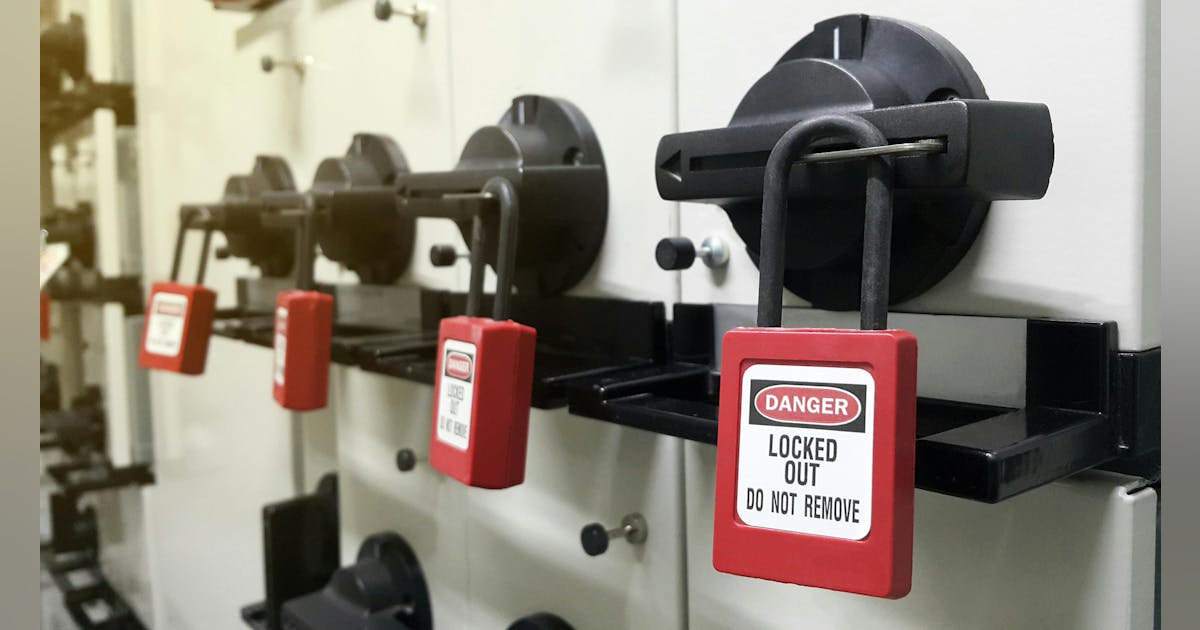
Most industrial accidents during maintenance aren’t caused by mechanical failure—they’re caused by human oversight. One missing step, one unlabeled lock, one skipped log entry can turn a routine repair into a life-altering event. At the heart of preventing these incidents lies a simple but powerful tool: the lock out tag out log.
These logs aren’t just paperwork. They’re legal records, communication tools, and safety audits rolled into one. Yet they’re often overlooked, rushed through, or treated as a box-ticking exercise. That’s a mistake with real consequences.
OSHA estimates that proper lockout/tagout (LOTO) procedures prevent 120 fatalities and 50,000 injuries annually in the U.S. alone. And while the physical locks and tags get the attention, it’s the logs that provide traceability, accountability, and proof of compliance when it matters most.
Let’s break down what lock out tag out logs really do, why they’re required, and how to make them work effectively in real-world environments.
What Are Lock Out Tag Out Logs?
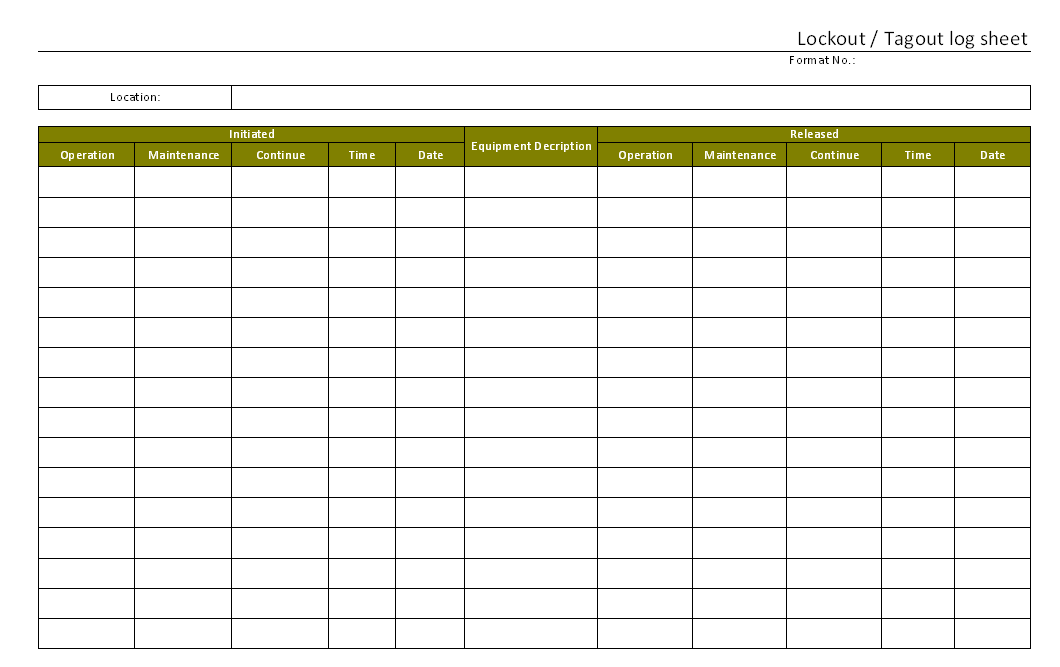
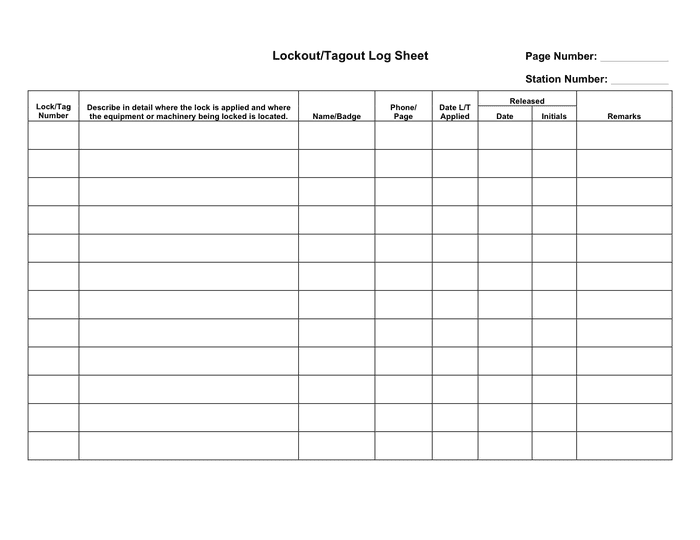
A lock out tag out log is a formal record documenting every instance where energy sources are isolated on machinery or equipment before maintenance or servicing. It logs who applied locks and tags, when they were applied, what equipment was involved, and when control was returned.
Unlike the physical locks themselves—which serve as immediate visual warnings—the log serves as a permanent, searchable record. This makes it essential for:
- Confirming that procedures were followed
- Tracking personnel involvement
- Supporting investigations after incidents
- Passing regulatory audits
These logs are required under OSHA 29 CFR 1910.147, which mandates that employers establish a written energy control program, including documentation of each servicing event.
Why Lock Out Tag Out Logs Are Legally Required
OSHA doesn’t mandate logs simply to create more paperwork. The requirement exists because memory fails, shifts change, and assumptions kill.
Consider this real-world scenario: a technician locks out a conveyor system for belt replacement. Midway through, they’re pulled to another emergency. Another worker, unaware of the ongoing work, removes the lock and restarts the system. Without a log, there’s no trail showing that the equipment was still under service.
The log creates a chain of custody for equipment safety. It ensures that:
- Only the authorized employee can remove a lock
- Supervisors can verify work status across shifts
- Auditors can confirm compliance during inspections
Failure to maintain accurate LOTO logs can result in fines exceeding $15,000 per violation. In cases of willful neglect, penalties climb higher, and criminal charges become possible after serious incidents.
Key Elements of an Effective LOTO Log
A useful lock out tag out log isn’t just a list of names and times. It should include specific, actionable data. Here’s what belongs in every entry:
| Field | Purpose |
|---|---|
| Date and time of lockout | Establishes timeline and shift context |
| Equipment ID | Prevents confusion on complex floors |
| Name and ID of authorized employee | Ensures accountability |
| Type of energy isolated | Electrical, hydraulic, pneumatic, etc. |
| Lock and tag numbers used | Enables physical verification |
| Reason for servicing | Clarifies scope and risk level |
| Clearance and re-energization time | Completes the control loop |
| Supervisor signature (optional) | Adds oversight in high-risk cases |
Omitting even one of these fields weakens the log’s value. For example, listing only “conveyor system” instead of “Conveyor Line 3B, Motor ID C-309” creates ambiguity. In multi-line facilities, that ambiguity is dangerous.
Real-World Use Cases and Examples
Case 1: Shift Handover on a Packaging Line A maintenance technician begins work on a filler machine at 2:00 PM. They apply two locks (electrical and pneumatic) and log the entry. When their shift ends at 5:00 PM, they brief the next technician, who updates the log with their name and lock numbers. The original technician’s lock remains until the work is complete.
Without the log, the night shift worker might assume the system is clear. The log ensures continuity.
Case 2: Group Maintenance on a Chemical Reactor Three technicians from different departments service a reactor. Each applies their personal lock. The log shows all three names, lock IDs, and isolation points. Before re-energizing, the supervisor checks the log and physically verifies that all three have removed their locks.
Here, the log acts as both a checklist and a witness.
Case 3: Failed Audit Due to Incomplete Records During an OSHA inspection, an auditor requests LOTO records for a hydraulic press. The company provides tags but no logs. OSHA cites them for non-compliance, noting that tags alone don’t prove procedure adherence. The lack of logs implies no systematic control.
Common Mistakes That Undermine LOTO Logs
Even companies with strong safety cultures make errors that compromise their logs. Watch for these:
1. Blank or Incomplete Entries Leaving fields empty “to fill in later” often means they never get filled. Real-time logging is non-negotiable.
2. Using Generic Descriptions “Machine #2” or “north pump” aren’t sufficient. Use asset numbers and precise names.
3. Allowing Proxy Logging One person logging for an entire team erodes individual accountability. Each authorized employee must be listed.
4. Storing Logs in Inaccessible Formats A paper log left in a locked cabinet or a single spreadsheet on one computer creates information silos. Digital, centralized systems prevent data loss.
5. Failing to Archive Logs OSHA requires records of periodic inspections, but many companies discard old logs. Retain logs for at least one year—or longer if local regulations require.
Digital vs. Paper LOTO Logs: What Works Best?
While paper logs are acceptable under OSHA, digital systems offer clear advantages in modern operations.
| Factor | Paper Logs | Digital Logs |
|---|---|---|
| Accessibility | Limited to physical location | Cloud-based, real-time access |
| Searchability | Manual review required | Instant filtering by date, equipment, person |
| Audit readiness | Prone to damage or loss | Automatic backups and version control |
| Integration | None | Can link to CMMS, ERP, or EHS platforms |
| Error prevention | Handwriting errors, omissions | Mandatory fields, dropdowns, validations |

For small workshops with low maintenance volume, paper may suffice. But for facilities with rotating shifts, multiple contractors, or complex machinery, digital logs significantly reduce risk.
That said, going digital only works if the system is user-friendly. Clunky software leads to workarounds—like printing digital forms and signing them on paper, defeating the purpose.
Top 5 Digital LOTO Log Solutions For teams ready to upgrade from paper, here are five reliable platforms that streamline lock out tag out logging:
- FacilityCare LOTO Manager
- - Cloud-based with mobile app support
- - Customizable forms and automated reminders
- - Integrates with SAP and Oracle EAM
- - Best for: Mid to large manufacturers
- Proteus EQ
- - Real-time lockout status dashboard
- - QR code scanning for equipment
- - Audit trail and reporting tools
- - Best for: Pharmaceutical and food processing
- LockOut TagOut.com Software Suite
- - Simple interface, low learning curve
- - Includes tag printing and lock tracking
- - Affordable for small teams
- - Best for: SMEs and field service operations
- Intelex LOTO
- - Enterprise-grade with AI-assisted workflows
- - Advanced analytics and compliance alerts
- - Supports multi-site rollouts
- - Best for: Global industrial firms
- Fiix by Rockwell Automation
- - Embedded in a full CMMS platform
- - Auto-generates LOTO tasks from work orders
- - Syncs with IoT sensors for status verification
- - Best for: Smart factories and Industry 4.0 environments
When choosing a system, prioritize ease of use, mobile access, and integration capability. The best tool is the one your team actually uses.
How to Train Teams on Proper LOTO Logging
Knowledge gaps are the biggest threat to log accuracy. Training must go beyond theory.
Effective LOTO log training includes:
- Hands-on drills where employees complete a mock log during a simulated shutdown
- Scenario-based exercises—e.g., “You arrive on shift and see a lock but no log. What do you do?”
- Periodic audits where supervisors review random log entries for completeness
- Feedback loops that return audit findings to technicians for improvement
Training isn’t a one-time event. OSHA requires re-certification every 12 months, but proactive companies conduct quarterly refreshers, especially after near-misses.
Closing the Loop: From Log to Safety Culture
A lock out tag out log is more than a compliance requirement—it’s a culture indicator. When logs are filled accurately, reviewed regularly, and treated as vital records, it signals that safety isn’t just policy. It’s practice.
The most effective logs aren’t hidden in binders or buried in folders. They’re visible, used daily, and integrated into workflows. They’re referenced during shift changes, pulled during incident reviews, and audited without fear.
If your LOTO logs feel like bureaucracy, they’re not being used right. Fix that—not because OSHA might show up, but because someone’s safety depends on it.
Start today: Audit your last 10 log entries. Are they complete? Clear? Accessible? If not, redesign the process before the next lock goes on.
Safety isn’t just locked in place. It’s logged, verified, and never assumed.
FAQ
What should you look for in Lock Out Tag Out Logs: Why They Matter and How to Use Them? Focus on relevance, practical value, and how well the solution matches real user intent.
Is Lock Out Tag Out Logs: Why They Matter and How to Use Them suitable for beginners? That depends on the workflow, but a clear step-by-step approach usually makes it easier to start.
How do you compare options around Lock Out Tag Out Logs: Why They Matter and How to Use Them? Compare features, trust signals, limitations, pricing, and ease of implementation.
What mistakes should you avoid? Avoid generic choices, weak validation, and decisions based only on marketing claims.
What is the next best step? Shortlist the most relevant options, validate them quickly, and refine from real-world results.