Workers are injured every year during equipment maintenance—not because machinery fails, but because it’s accidentally energized. That’s where a lockout tagout safety PDF becomes more than just a document. It’s a lifeline. These guides standardize procedures, align teams with OSHA requirements, and serve as daily references to prevent catastrophic incidents.
A quality lockout tagout safety PDF isn’t just a formality. It’s a tactical resource filled with energy control procedures, visual checklists, compliance frameworks, and real-world applications. Whether you're managing a manufacturing floor, overseeing facility maintenance, or developing safety training, the right PDF can bridge the gap between policy and practice.
This article breaks down what makes a lockout tagout safety PDF effective, how to use it correctly, and where to find or build one that delivers real value.
Why a Lockout Tagout Safety PDF Matters
Lockout tagout (LOTO) procedures are required by OSHA under standard 29 CFR 1910.147. The goal? Prevent unexpected energization or startup of machines during servicing or maintenance. But knowing the regulation exists isn’t enough. You need a way to operationalize it—consistently and correctly.
That’s where a lockout tagout safety PDF comes in.
Unlike verbal instructions or memory-based routines, a PDF document:
- Provides a permanent, accessible record of procedures
- Standardizes steps across shifts and teams
- Supports training and onboarding
- Serves as audit-proof documentation
- Reduces reliance on individual memory, minimizing human error
Without a clear, centralized guide, even experienced technicians can skip steps—especially under time pressure. A 2022 OSHA report found that 58% of LOTO violations stemmed from incomplete or missing procedures. A well-designed PDF directly combats that risk.
Key Components of an Effective LOTO Safety PDF
Not all PDFs are created equal. A checklist on one page won’t cut it. A truly effective lockout tagout safety PDF includes these core sections:
1. Equipment-Specific Energy Control Procedures
Generic instructions fail when applied to complex machinery. Your PDF must include detailed, step-by-step procedures for each major piece of equipment.
For example: - A CNC machine may require electrical, hydraulic, and pneumatic isolation - A conveyor system could have multiple disconnect points across its length
Each procedure should spell out: - All energy sources (electrical, mechanical, hydraulic, pneumatic, chemical, thermal) - The location and type of energy-isolating devices - Sequence of shutdown, isolation, lockout, and verification
Example: In a food processing plant, a mixer required three lockout points—main disconnect, hydraulic valve, and agitator lock—but workers only applied one lock. A detailed PDF procedure prevented recurrence.
2. Visual Lockout Diagrams
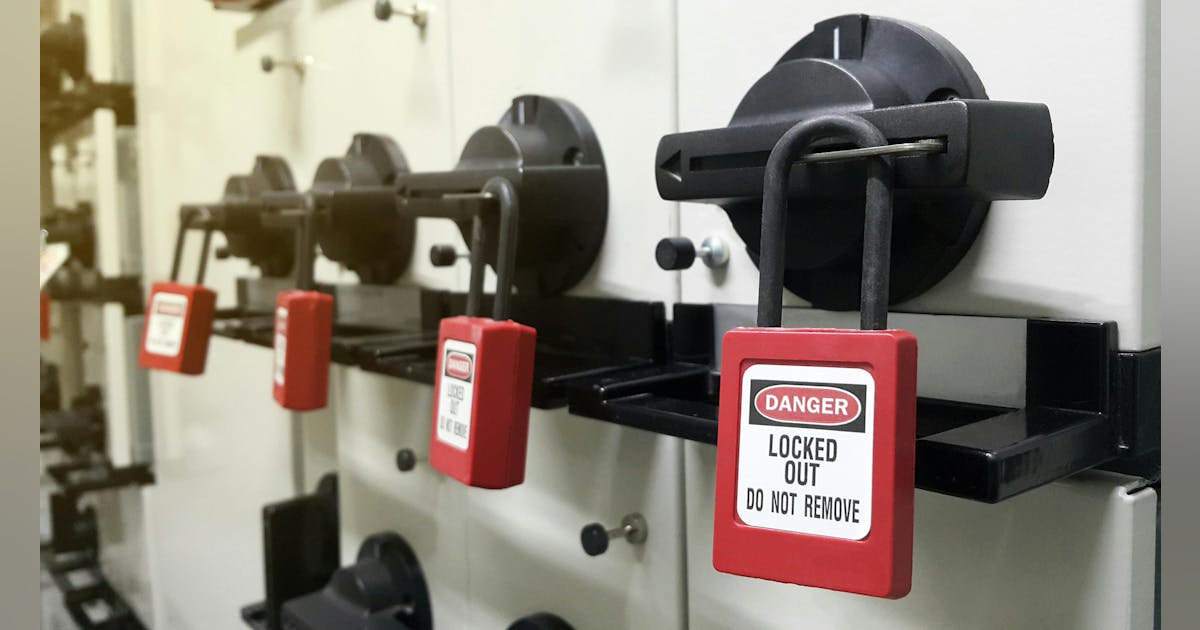
Text alone isn’t enough. Include labeled diagrams showing: - Where to apply locks and tags - The path of energy flow - Lockout device types (padlocks, valve covers, circuit lockouts)
Visuals reduce confusion, especially in multilingual environments.
3. Checklists for Daily Use
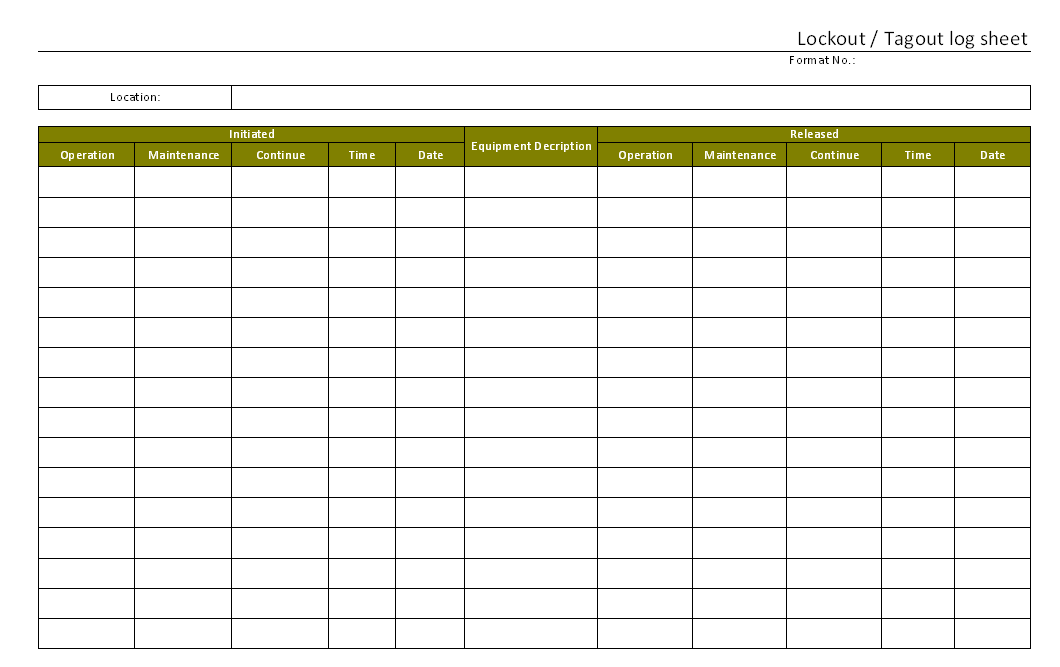
Embed printable or digital checklists that mirror OSHA’s required steps:
- Notify affected employees
- Shut down equipment properly
- Isolate all energy sources
- Apply lockout/tagout devices
- Release stored energy (e.g., bleed lines, block moving parts)
- Verify isolation (try-start test)
These checklists should be integrated into the PDF and easy to replicate.
4. Roles and Responsibilities

Clarify who is: - An authorized employee (performs LOTO) - An affected employee (operates or uses equipment)
Define accountability. Without it, confusion leads to gaps.
5. Compliance References and Sign-Off Pages
Include citations to: - OSHA 1910.147 - Industry-specific standards (e.g., NFPA 70E for electrical)
Also add sign-off pages for annual procedure reviews and employee training verification.
Common Mistakes in LOTO PDFs
Even compliant organizations make preventable errors. Avoid these:
- One-size-fits-all procedures: Using the same steps for a drill press and a boiler system ignores critical differences.
- Missing stored energy controls: Failing to address springs, capacitors, or elevated parts.
- Outdated diagrams: Equipment changes, but the PDF doesn’t.
- No verification step: Skipping the “try-start” test leaves equipment status unconfirmed.
- Locked PDFs with no edit access: Prevents updates when procedures change.
Real case: A maintenance team in Ohio bypassed LOTO because the PDF hadn't been updated after a machine retrofit. Result: a crushed hand during alignment. The outdated guide was cited as a contributing factor.
How to Use a Lockout Tagout Safety PDF in Practice
A PDF isn’t useful if it lives in a folder no one opens. Integrate it into daily workflows:
During Training Use the PDF as the core training manual. Break it into modules: - General LOTO principles - Equipment-specific simulations - Quiz on procedure steps
Track completion with digital sign-offs.
During Maintenance Technicians should:
- Pull up the PDF on a tablet or print the checklist
- Follow the steps in order
- Place personal lock and tag
- Verify isolation
- Log the work
Supervisors can use the PDF during audits to verify compliance.
For Audits and Inspections During internal or OSHA audits: - Present the PDF as proof of documented procedures - Show employee sign-offs and training records - Demonstrate that procedures match current equipment
A well-maintained PDF reduces inspection risk and speeds up compliance verification.
Where to Get a Lockout Tagout Safety PDF
You don’t have to build from scratch. But choosing the right source matters.
| Source | Pros | Cons |
|---|---|---|
| OSHA.gov | Free, authoritative, compliant | Generic, not equipment-specific |
| Industry associations (e.g., NFPA) | Technical depth, updated standards | May require purchase or membership |
| Safety training platforms (e.g., Vivid Learning) | Ready-to-use templates, multimedia | Subscription-based |
| Internal development | Fully customized, accurate | Requires SME time and review |
| Third-party consultants | Expert-reviewed, audit-ready | Can be expensive |
The best approach? Combine OSHA templates with custom modifications. Start with a free OSHA-compatible template, then adapt it for your machinery, workforce, and facility layout.
Creating Your Own Lockout Tagout Safety PDF
If you’re building your own, follow this workflow:
- Inventory Equipment
- List all machines requiring LOTO. Prioritize high-risk or complex systems.
- Map Energy Sources
- For each machine, identify every form of energy and isolation point.
- Write Step-by-Step Procedures
- Use active voice and imperative mood:
- - “Shut off the main power switch at Panel B3.”
- - “Close and lock the hydraulic isolation valve.”
- Add Visuals
- Take photos or create diagrams. Annotate them clearly.
- Embed Checklists
- Use form fields or printable boxes so users can mark completion.
- Review with Authorized Employees
- Have hands-on technicians validate each step.

- Publish and Distribute
- Save as PDF. Store on shared drives, intranets, or mobile apps.
- Update Annually or After Changes
- Reissue the PDF after equipment modifications or near-misses.
Pro tip: Use version control. Name files like “LOTO_Guide_Conveyor_v2.1_2025.pdf” so users always know they’re using the latest version.
Real-World Use Cases
Case 1: Manufacturing Plant with 12 Production Lines Challenge: Multiple shifts, high turnover, inconsistent LOTO application. Solution: Created a master LOTO PDF with tabs for each line. Added QR codes on machines linking to digital versions. Result: 100% procedure adherence in 6 months.
Case 2: University Lab with Shared Equipment Challenge: Researchers unfamiliar with industrial safety protocols. Solution: Developed a simplified LOTO PDF with pictograms and minimal text. Integrated into onboarding. Result: Zero incidents over two years.
Case 3: Municipal Water Treatment Facility Challenge: Aging equipment with mixed energy sources. Solution: Built a layered PDF—general principles first, then detailed procedures for each pump and valve system. Included emergency release steps. Result: Passed OSHA audit with no citations.
Final Tips for Maximizing Impact
- Make it mobile-friendly: Technicians need access on tablets or phones.
- Translate if needed: If your team speaks multiple languages, provide multilingual versions.
- Integrate with work orders: Link the PDF directly in CMMS systems.
- Print pocket guides: Condense key steps into wallet-sized cards.
- Audit usage: Track how often the PDF is accessed or printed—low use means it’s not effective.
Conclusion
A lockout tagout safety PDF is not just a compliance box to check. It’s a critical tool that protects people, prevents downtime, and strengthens safety culture. Whether you download a template or build your own, ensure it’s detailed, up to date, and embedded in daily operations. The best PDF isn’t the one that looks professional—it’s the one workers actually use.
Start today: Audit your current LOTO documentation. If it’s incomplete, outdated, or ignored, revise it. Distribute it. Train with it. Because when a machine unexpectedly powers on, seconds count—and the right PDF could be what keeps someone safe.
FAQ
What is a lockout tagout safety PDF? A lockout tagout safety PDF is a digital document containing standardized procedures, checklists, and diagrams to control hazardous energy during equipment maintenance.
Is a LOTO PDF required by OSHA? OSHA requires written energy control procedures. A PDF is a common and accepted format for maintaining and distributing these documents.
Can I use a generic LOTO PDF for all machines? No. OSHA requires equipment-specific procedures. Generic templates can be a starting point but must be customized for each machine.
Who should have access to the LOTO safety PDF? Authorized employees (who perform maintenance) and affected employees (who operate equipment) should all have easy access.
How often should a LOTO PDF be updated? Review and update at least annually or whenever equipment, processes, or personnel change.
Can a LOTO PDF include electronic signatures? Yes, if the system ensures authenticity, integrity, and accessibility, electronic signatures are acceptable for training and review logs.
Are there free LOTO safety PDF templates available? Yes, OSHA and several safety organizations offer free, downloadable LOTO templates that meet regulatory standards.
FAQ
What should you look for in Lockout Tagout Safety PDF Guide for Workplace Compliance? Focus on relevance, practical value, and how well the solution matches real user intent.
Is Lockout Tagout Safety PDF Guide for Workplace Compliance suitable for beginners? That depends on the workflow, but a clear step-by-step approach usually makes it easier to start.
How do you compare options around Lockout Tagout Safety PDF Guide for Workplace Compliance? Compare features, trust signals, limitations, pricing, and ease of implementation.
What mistakes should you avoid? Avoid generic choices, weak validation, and decisions based only on marketing claims.
What is the next best step? Shortlist the most relevant options, validate them quickly, and refine from real-world results.