Every year, hundreds of workers suffer severe injuries—or worse—because machinery was accidentally energized during maintenance. A simple oversight, a miscommunication, or a missing lock can turn routine servicing into a life-altering event. At the heart of preventing these tragedies is a deceptively simple system: lockout tagout (LOTO) locks and tags.
These devices aren’t just accessories—they’re the final physical and procedural safeguards that separate technicians from unexpected startup or release of stored energy. Whether you're in manufacturing, utilities, or facilities management, understanding how to properly apply, manage, and maintain LOTO devices is non-negotiable.
This guide cuts through the noise to deliver real-world clarity on lockout tagout locks and tags—how they work, how they’re used, and how to avoid the mistakes that compromise safety.
What Are Lockout Tagout Locks and Tags?
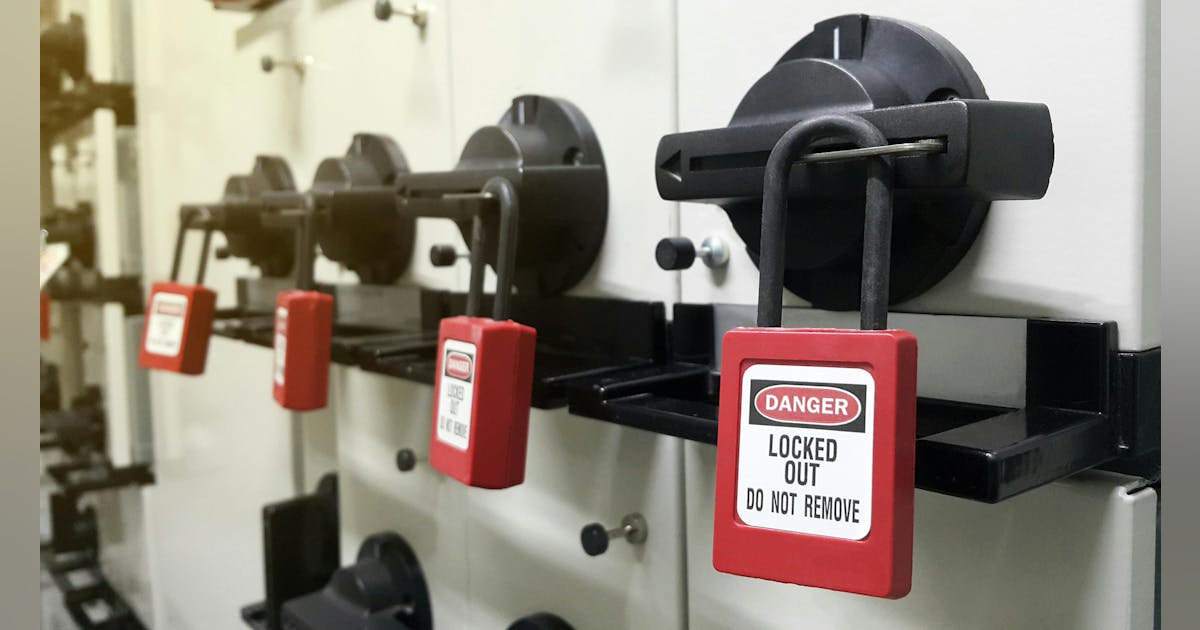
Lockout tagout locks and tags are physical control devices used to isolate energy sources from machinery during maintenance or servicing. The "lock" is a keyed or combination device that secures energy-isolating mechanisms (like circuit breakers or valve handles), while the "tag" is a warning label that communicates why the lock is in place, who applied it, and when.
Together, they enforce the core principle of LOTO: no one touches live equipment without full control over all energy sources.
This system applies to electrical, mechanical, hydraulic, pneumatic, chemical, and thermal energy. Consider a conveyor belt system in a packaging plant. Before a technician clears a jam, they must:
- Shut down the conveyor
- Isolate it from power (via disconnect switch)
- Apply a personal lock to that switch
- Attach a tag stating their name, department, and reason for lockout
Only when all steps are complete—and all locks removed by the individuals who applied them—can the system be restarted.
Why Lockout Tagout Is More Than Just a Procedure
Many organizations treat LOTO as a compliance checkbox—something OSHA requires, so they buy a few locks and print generic tags. But real safety goes beyond paperwork.
LOTO failures often stem from procedural gaps masked by physical tools. For example:
- A shared master lock used by multiple workers
- Blank or incomplete tags
- Locks left on after repairs are complete
- Tag-only procedures on equipment that should be locked
These shortcuts defeat the purpose. OSHA standard 1910.147 mandates that energy control programs include training, periodic inspections, and documented procedures. But even with all that, the weakest link is often the lock and tag themselves—if they’re not durable, standardized, or uniquely assigned.
Choosing the Right Lockout Devices
Not all locks and tags are created equal. The right choice depends on your environment, energy types, and workforce size.
Lock Types and Applications
Padlock-Style Locks Most common. Available in keyed-alike, keyed-different, or combination versions. - Use case: Individual control of circuit breakers or disconnects - Tip: Use color-coded locks by department (red for electrical, blue for mechanical)

Valve Lockouts Designed to secure gate, ball, or butterfly valves. Often made of durable plastic or metal. - Use case: Preventing accidental release of steam, gas, or chemicals - Limitation: Not all fit every valve type—measure before buying
Circuit Breaker Lockouts Plastic or metal devices that slide over breakers to prevent flipping. - Use case: Electrical panels in industrial settings - Common mistake: Using universal models that don’t fit specific breaker brands
Group Lockout Hasps Allow multiple workers to apply their personal locks to a single isolation point. - Use case: Complex repairs requiring several technicians - Critical rule: No work begins until every lock is applied
Tag Design and Compliance
Tags must be legible, durable, and tamper-resistant. OSHA requires them to include:
- Employee name
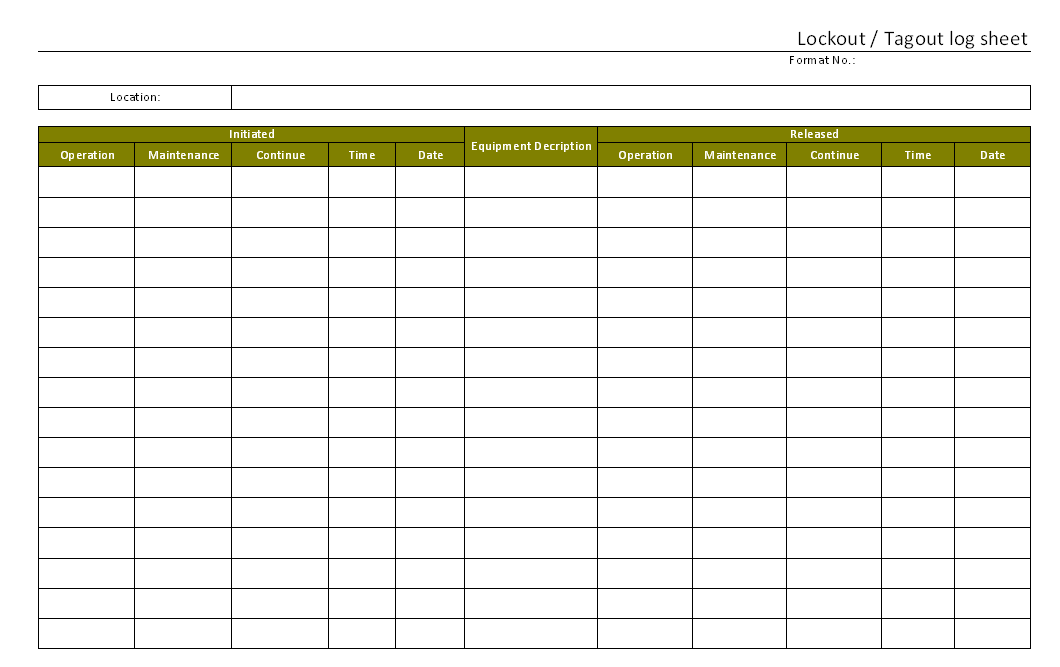
- Date and time of application
- Reason for lockout
- Department or shift
Paper tags fade, tear, or get lost. Better options include:
- Polyester or laminated vinyl tags
- Pre-printed with required fields
- Space for barcode or QR code linking to digital logs
Avoid handwritten tags in high-risk environments—illegible writing causes confusion and delays.
Common Mistakes That Undermine LOTO Safety
Even experienced teams make errors. Here are the most frequent—and dangerous—mistakes:
1. Using Tags Without Locks Tags alone do not control energy. They’re warnings, not safeguards. OSHA allows tag-only systems only when locks are not feasible—and even then, additional protective measures are required.
2. Lock Sharing One lock, multiple users? That violates the personal control principle. Each worker must apply their own lock. Shared locks mean accountability disappears.
3. Incomplete Energy Isolation Machines often have multiple energy sources. A technician might lock the electrical supply but forget hydraulic pressure. Always perform an energy source audit before starting work.
4. Skipping Lockout for “Quick Fixes” Five-minute repairs are when most incidents happen. The LOTO procedure applies regardless of task duration.
5. Poor Lockout Station Management Locks and tags scattered in toolboxes or offices lead to delays and non-compliance. Use centralized lockout stations near high-risk equipment, stocked with all necessary devices.
How to Build a Reliable LOTO Program
A strong LOTO program doesn’t start with locks—it starts with planning.
- Conduct an Energy Source Inventory
- Map every machine and its energy types (electrical, pneumatic, etc.). Identify isolation points.
- Develop Machine-Specific Procedures
- Don’t rely on generic steps. Write clear, illustrated instructions for each piece of equipment.
- Train and Re-Train Employees
- Authorized employees (those applying locks) and affected employees (those operating equipment) need different training. Annual refreshers are required.
- Perform Periodic Inspections
- OSHA requires at least annual audits. Watch real lockout procedures and verify compliance. Document findings and correct gaps.
- Standardize Locks and Tags
- Use consistent colors, labeling, and storage. Consider digital tracking systems for large facilities.
Top 5 Lockout Tagout Device Kits For facilities starting or upgrading their LOTO program, these kits offer comprehensive solutions:

| Product | Key Features | Best For |
|---|---|---|
| Grace Industries LOTO-2000 Kit | 20-piece set: 10 locks, 10 tags, hasp, breaker lockouts | Small teams, electrical maintenance |
| Safeguard Supply Master Kit | 50+ components, includes valve locks, group hasps, storage case | Mid-sized manufacturing plants |
| Johnson Controls LOTO Pro Pack | Digital tag system with QR codes, cloud logging | Facilities using digital safety workflows |
| Seton Heavy-Duty Valve Lockout Kit | UV-resistant plastic, high-temp tolerance | Chemical, oil & gas environments |
| Brady LOTO Station 3000 | Wall-mounted station, 30 locks capacity, customizable | Large facilities with many technicians |
Choose based on your risk profile. A food processing plant with frequent line maintenance needs different tools than a data center with rare electrical work.
Real-World LOTO Failures: Lessons Learned
In 2022, a maintenance worker at a Midwest auto parts plant was killed when a robotic arm activated during calibration. Investigation found:
- The technician used a tag-only system
- The lockout point was shared with another machine
- No group hasp was used despite multiple workers on-site
OSHA cited the company for willful violations and $156,000 in fines.
This wasn’t a failure of intent—it was a failure of execution. Simple fixes could have prevented it:
- Use a lock, not just a tag
- Isolate each energy source individually
- Enforce individual lock application
LOTO isn’t about avoiding fines. It’s about ensuring every worker goes home safely.
The Bottom Line: LOTO Is Personal
Lockout tagout locks and tags are more than hardware—they’re symbols of responsibility. When a technician applies their lock, they’re saying: I am in control. No one else can override my safety.
That trust must be reinforced with training, consistency, and the right tools. Invest in durable, standardized devices. Audit procedures regularly. And never allow exceptions—even for “fast” jobs.
In the end, the most effective LOTO program isn’t the cheapest or fastest. It’s the one where every lock tells a story of accountability, and every tag carries the weight of a promise: This machine stays off until I say otherwise.
Equip your team properly. Train them thoroughly. And make lockout tagout not just a policy—but a culture.
FAQs
What is the difference between a lockout and a tagout? A lockout physically prevents energy isolation devices from being operated, while a tagout is a warning label. Lockout provides control; tagout provides information.
Can you use a tag without a lock? Only if a lock cannot be used and additional safety measures are in place. OSHA generally requires lockout for full protection.
Who can remove a lockout device? Only the authorized employee who applied the lock may remove it, unless under strict emergency or employer-established removal procedures.
What materials are best for lockout tags? Durable, weather-resistant materials like laminated polyester or vinyl ensure tags remain legible in industrial environments.
How often should LOTO procedures be audited? OSHA requires at least one annual inspection of each energy control procedure.
Do all employees need LOTO training? Authorized employees (who perform servicing) must be fully trained. Affected employees (who operate equipment) need awareness training.
Are electronic lockout systems OSHA-compliant? Yes, if they meet the requirements of 1910.147, including personal control, verification, and documentation.
FAQ
What should you look for in Lockout Tagout Locks and Tags: The Ultimate Safety Guide? Focus on relevance, practical value, and how well the solution matches real user intent.
Is Lockout Tagout Locks and Tags: The Ultimate Safety Guide suitable for beginners? That depends on the workflow, but a clear step-by-step approach usually makes it easier to start.
How do you compare options around Lockout Tagout Locks and Tags: The Ultimate Safety Guide? Compare features, trust signals, limitations, pricing, and ease of implementation.
What mistakes should you avoid? Avoid generic choices, weak validation, and decisions based only on marketing claims.
What is the next best step? Shortlist the most relevant options, validate them quickly, and refine from real-world results.